
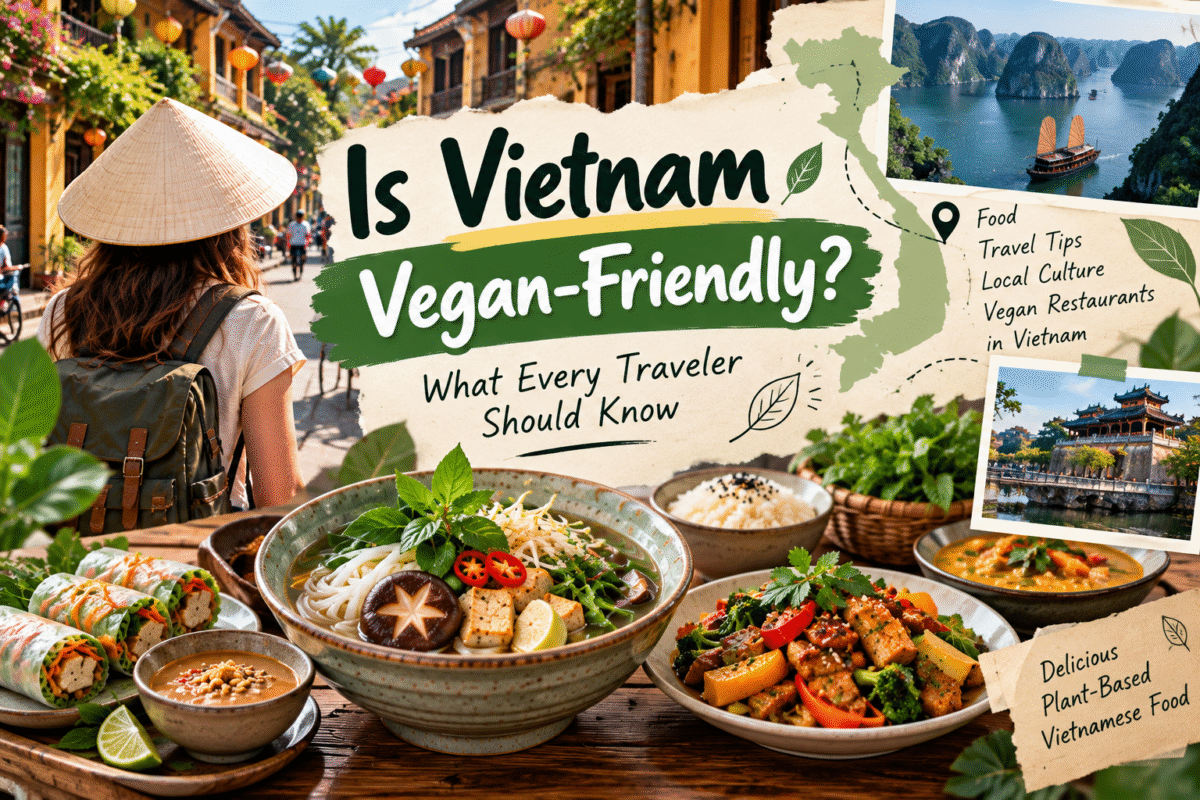
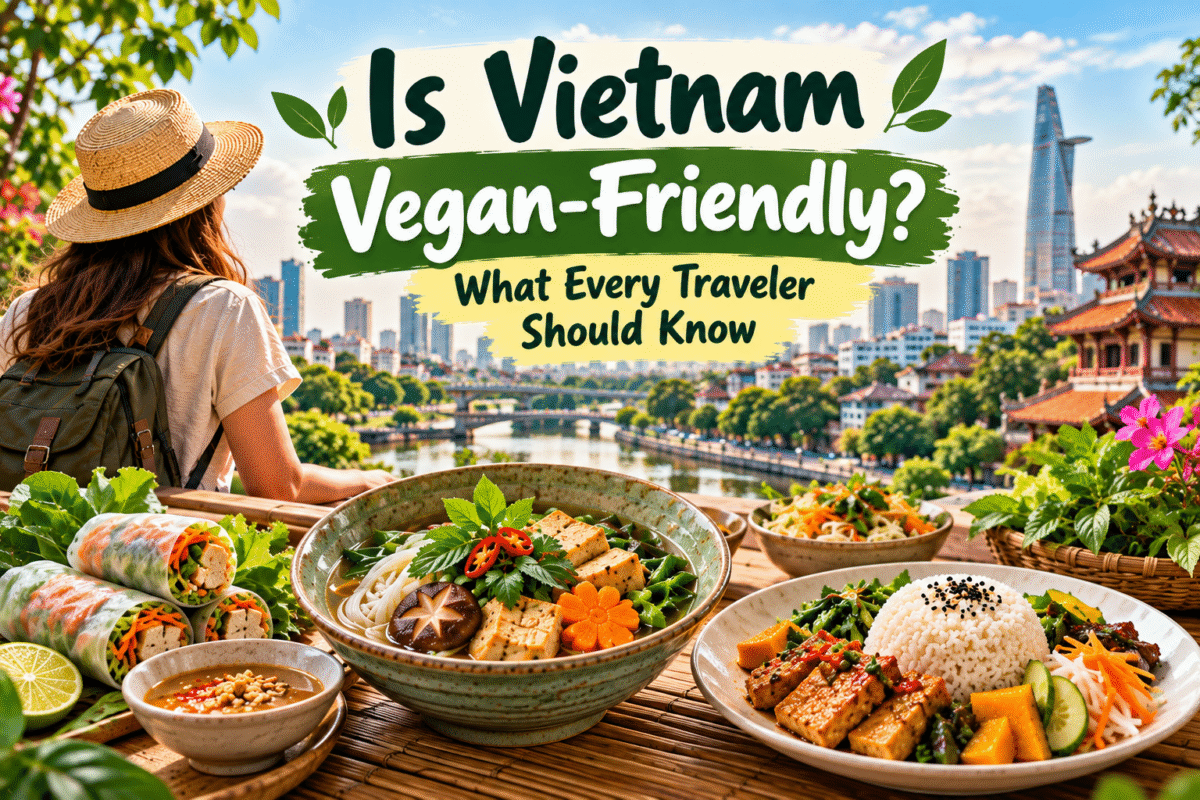
Is Vietnam Vegan-Friendly? What Every Traveler Should Know
Vietnam is a fascinating destination for travelers who love food, culture, and new experiences. From bustling street markets to peaceful Buddhist temples, the country offers a rich culinary tradition with rice, fresh vegetables, tofu, mushrooms, noodles, and aromatic herbs.
But is Vietnam vegan-friendly?
Yes, Vietnam can be a rewarding destination for vegan travelers, especially if you know how to identify fully plant-based restaurants and understand which ingredients to check before ordering. The country has a long tradition of vegetarian dining, influenced in part by Buddhist food culture. However, not every vegetarian dish is vegan, and some familiar Vietnamese recipes contain fish sauce, shrimp paste, eggs, or animal-based broth. <Cite refs={[“turn814574search11″,”turn814574search1”]}/>
This guide explains what vegan travelers should know before visiting Vietnam, how to find reliable vegan food, which local dishes to try, and where to discover 100% vegan Vietnamese cuisine in Ho Chi Minh City.
1. Is Vietnam a Good Destination for Vegan Travelers?
Vietnam offers many opportunities to enjoy plant-based food. In cities such as Hanoi, Hue, Da Nang, Hoi An, and Ho Chi Minh City, travelers can find vegetarian eateries, Buddhist-inspired meals, and restaurants dedicated to vegan cooking.
Common plant-based ingredients include rice, tofu, mushrooms, leafy greens, noodles, beans, and fresh herbs. These ingredients can be used in a wide range of flavorful Vietnamese dishes.
One important distinction is the meaning of “chay.” In Vietnamese, this word generally refers to vegetarian food, but its exact meaning and the ingredients used can vary between restaurants.
If you avoid all animal products, look for the terms “100% vegan,” “fully vegan,” or “thuần chay.” These descriptions are more specific than simply looking for a vegetarian option.
2. Understand the Difference Between Vegetarian and Vegan Food
Vegetarian food may exclude meat and seafood but still contain eggs or dairy. Vegan food excludes all animal-derived ingredients, including fish sauce and other animal-based seasonings.
This distinction matters when traveling in Vietnam because some dishes may appear plant-based while containing ingredients that are not immediately visible.
For example, vegetable stir-fries may use oyster sauce, noodle soups may contain meat stock, and dipping sauces may include fish sauce.
When ordering, ask about the complete dish, including its broth, sauces, seasonings, and cooking ingredients. If you prefer not to investigate every item individually, choosing a dedicated vegan restaurant can make dining easier.
3. Watch Out for Hidden Animal Ingredients
One of the biggest challenges for vegan travelers in Vietnam is identifying animal products hidden in sauces and broths.
Here are some ingredients to check:
- Fish sauce (nước mắm): Common in Vietnamese cooking, including dipping sauces, marinades, and stir-fries.
- Shrimp paste (mắm tôm): Used in certain regional dishes and condiments.
- Oyster sauce (dầu hào): Sometimes added to mushroom and vegetable dishes.
- Eggs (trứng): May be included in fried rice, noodles, pancakes, and baked foods.
- Dairy products (sữa, bơ): May appear in desserts, drinks, and certain recipes.
- Animal-based broth: Some soups use meat or seafood stock even when the toppings contain only vegetables.
The official Vietnam Tourism vegetarian guide also recommends learning the phrase “không nước mắm,” meaning “no fish sauce.” <Cite refs={[“turn814574search11″,”turn814574search1”]}/>
If you follow a strict vegan diet, communicate your requirements before ordering rather than assuming a dish is vegan because it contains no visible meat.
4. What Vietnamese Food Can Vegans Enjoy?
Vietnamese cuisine offers plenty of variety for people who enjoy plant-based meals. At a dedicated vegan restaurant, you may discover familiar local dishes prepared with completely vegan ingredients.
Vegan rice dishes
Rice served with tofu, mushrooms, vegetables, and plant-based sauces makes a satisfying meal. Rice plates are convenient for lunch or dinner and allow you to sample several Vietnamese flavors at once.
Vegan noodle soups
Plant-based noodle soups may feature rice noodles, mushrooms, tofu, herbs, and vegetable-based broth. Always confirm that the broth and seasonings contain no animal products.
Tofu and mushroom specialties
Tofu and mushrooms are versatile ingredients in Vietnamese cooking. They can be braised, stir-fried, cooked with lemongrass, or served with rice and vegetables.
Vegan spring rolls
Fresh rice-paper rolls can be filled with vegetables, herbs, noodles, and tofu. Ask whether both the filling and dipping sauce are vegan.
Vegan fried rice and stir-fried noodles
These popular dishes can be prepared with vegetables and plant-based seasonings. Confirm that the restaurant does not use eggs, fish sauce, oyster sauce, or animal-based cooking ingredients.
Exploring these dishes is a delicious way to discover Vietnamese food without compromising your dietary choices.
5. Learn a Few Vietnamese Phrases Before You Travel
You do not need to speak Vietnamese fluently to find vegan food. A few simple phrases can help you communicate with restaurant staff.
“Tôi ăn thuần chay.”
I follow a vegan diet.
“Không nước mắm.”
No fish sauce.
“Không trứng, không sữa.”
No eggs, no dairy.
“Không mắm tôm.”
No shrimp paste.
“Món này có hoàn toàn thuần chay không?”
Is this dish completely vegan?
Save these phrases on your phone and show them to restaurant staff when necessary. Naming the ingredients you avoid is often clearer than relying on the word “vegetarian” alone.
6. How to Find 100% Vegan Restaurants in Vietnam
Google Maps is a practical starting point for finding vegan restaurants while exploring Vietnam.
Try searching for:
- 100% vegan restaurant in Vietnam
- Vegan food near me
- Vegan restaurant in Ho Chi Minh City
- Vegan restaurant District 3 Saigon
- Vegan restaurant District 11 Ho Chi Minh City
- Affordable vegan Vietnamese food
Before visiting, check the menu, customer reviews, photos, opening hours, and directions. Look for reviews that specifically mention fully vegan food, no eggs, no dairy, and clear ingredient information.
You can also save several restaurants before leaving your hotel. This is particularly useful when exploring unfamiliar neighborhoods or traveling between sightseeing destinations.
A dedicated vegan restaurant can be a convenient choice because its menu is designed around plant-based ingredients rather than offering only a few vegetarian alternatives.
7. Discover Chay Tue Dang Quang in Ho Chi Minh City
If your travels bring you to Ho Chi Minh City, also known as Saigon, you can explore the city’s plant-based food scene while discovering its neighborhoods and local culture.
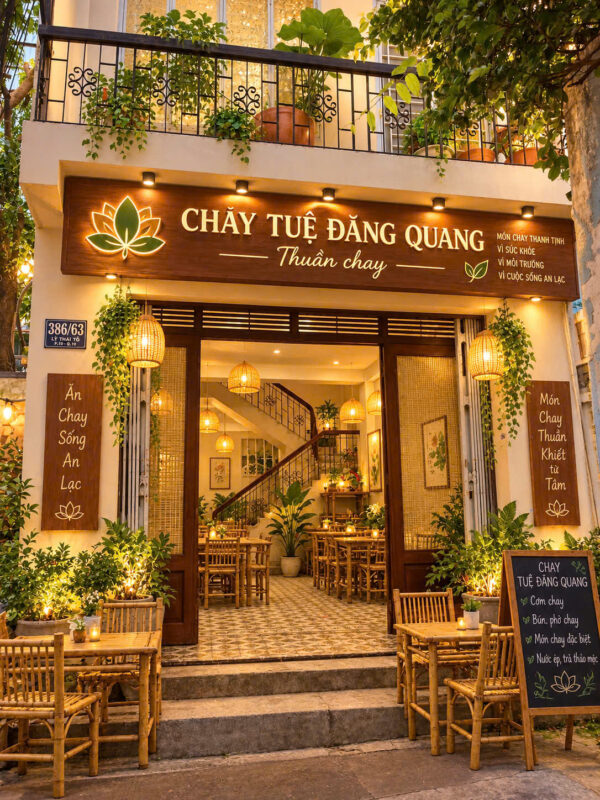
Chay Tue Dang Quang is a 100% vegan Vietnamese restaurant with two locations in Ho Chi Minh City. The restaurant focuses on plant-based ingredients such as vegetables, mushrooms, tofu, rice, and noodles. Its dining approach excludes eggs and dairy and does not focus on industrial vegetarian mock meats.
Depending on the current menu, guests can explore Vietnamese-style rice dishes, noodle soups, mushroom specialties, tofu dishes, and other plant-based meals.
Whether you are a long-time vegan, a Buddhist traveler, or simply interested in trying Vietnamese cuisine made entirely from plants, Chay Tue Dang Quang is an option to consider during your visit.
Chay Tue Dang Quang – District 3
Address: 368/63 Le Van Sy Street, Nhieu Loc Ward, District 3, Ho Chi Minh City, Vietnam.
This branch is an option for travelers exploring District 3 and looking for a fully plant-based Vietnamese meal.
Chay Tue Dang Quang – District 11
Address: 43 Huyen Toai Street, Phu Tho Ward, District 11, Ho Chi Minh City, Vietnam.
The second branch provides another location for local residents and international visitors seeking vegan Vietnamese food.
Restaurant: Chay Tue Dang Quang – 100% Vegan Restaurant
City: Ho Chi Minh City, Vietnam
Cuisine: Vietnamese vegan food
Dietary focus: No eggs or dairy
Main ingredients: Vegetables, mushrooms, tofu, rice, and noodles
To find the most convenient location, search for “Chay Tue Dang Quang” on Google Maps and select the branch that best fits your travel plans. Check the current directions and opening hours before visiting.
8. Is Vegan Food in Vietnam Affordable?
Vietnam offers a range of dining experiences, from simple neighborhood eateries to more elaborate restaurants. Plant-based meals can be a practical option for travelers looking for everyday lunches and dinners.
The price of a meal depends on the restaurant, location, portion size, and ingredients. Before visiting, check the current menu or contact the restaurant if you need to plan around a specific budget.
At Chay Tue Dang Quang, visitors can explore Vietnamese-style vegan meals featuring rice, noodles, tofu, mushrooms, and vegetables. Checking the current menu before your visit is the best way to confirm available dishes and prices.
9. Read Reviews and Confirm Restaurant Details
Online reviews can help you choose a restaurant, particularly when you are unfamiliar with local ingredients.
On Google Maps or Tripadvisor, look for comments about:
- Whether the restaurant serves fully vegan food
- Whether eggs and dairy are excluded
- The variety and quality of meals
- The clarity of the menu
- Staff communication and service
- Location and accessibility
Photos can help you understand what a restaurant serves, but they cannot confirm whether a sauce or broth contains animal products.
If you enjoy a meal, consider leaving an honest review to help other vegan travelers find places that suit their dietary needs.
10. Practical Tips for a Stress-Free Vegan Trip
A little preparation can make vegan travel in Vietnam much easier.
First, save the locations of suitable restaurants before leaving your accommodation. Second, keep Vietnamese dietary phrases on your phone. Third, check menus and directions before traveling across the city.
If you have strict dietary requirements, choose restaurants that clearly explain their ingredients and ask questions whenever something is uncertain.
It is also useful to keep an alternative restaurant in mind in case your first choice is busy or temporarily closed. Being prepared allows you to spend more time enjoying the country and less time searching for food.
Conclusion: Vietnam Can Be Vegan-Friendly With the Right Preparation
So, is Vietnam vegan-friendly? Yes, Vietnam can be a wonderful destination for vegan travelers, provided you understand local food terminology, check hidden ingredients, and choose restaurants that take plant-based dining seriously.
From rice dishes and noodle soups to tofu, mushrooms, and fresh vegetables, there are many ways to explore Vietnamese cuisine without animal products.
If you are visiting Ho Chi Minh City, consider discovering Chay Tue Dang Quang, with locations in District 3 and District 11, for Vietnamese-style vegan dining without eggs or dairy.
Looking for vegan food in Saigon? Search for Chay Tue Dang Quang on Google Maps, choose the branch most convenient for you, and discover the flavors of Vietnamese plant-based cuisine during your trip.


